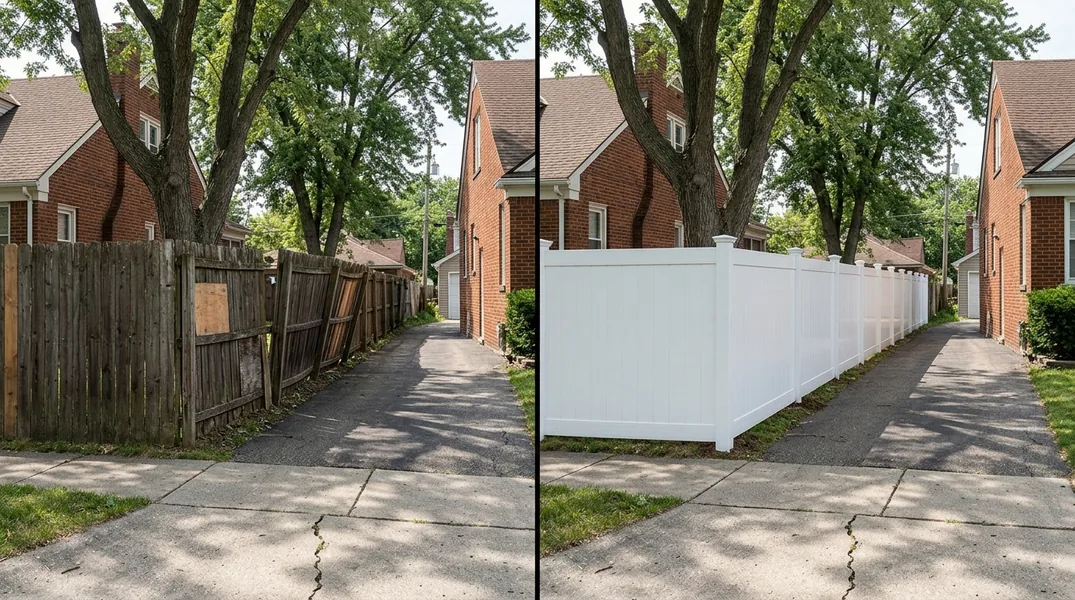
Understanding Michigan Pool Barrier Code
If you own a swimming pool in Detroit, you're legally required to install a barrier that meets Michigan's pool safety regulations. These codes exist to prevent accidental drowning, particularly among young children. Michigan's pool barrier requirements are outlined in the Michigan Building Code and are enforced by local municipalities across the state.
The regulations apply to all residential pools, including in-ground pools, above-ground pools, and hot tubs. Whether you're installing a new pool or upgrading an existing one, understanding these requirements upfront saves you from costly violations, fines, or having to rebuild your fence. Many homeowners in Detroit discover too late that their pool enclosure doesn't meet code, leading to expensive corrections.
The key components of Michigan's pool barrier code include minimum height specifications, maximum gap dimensions, gate design standards, and latch requirements. Each of these elements serves a specific safety purpose and must be carefully implemented during installation.
Pool Fence Height Requirements in Michigan
Michigan requires that all pool barriers be at least 4 feet tall when measured from the ground to the top of the fence. This height applies to all sides of the pool that face residential property or public areas. The 4-foot minimum is a standard across most U.S. states and is based on research showing that this height effectively prevents most children from climbing over or accessing the pool unsupervised.
When measuring fence height, inspectors will check multiple points along the fence line to ensure consistency. The measurement is taken from the ground on the pool side of the fence to the top rail or cap. If your yard has uneven terrain, you'll need to account for grade changes. For instance, if one section of ground is lower than another, the fence must still maintain 4 feet of height at every point. This is why professional installation matters. A fence that appears to meet code from one angle may fall short in other areas if not installed with proper attention to grading and elevation.
Wood & Privacy Fence Installation is the most popular choice for pool enclosures in the Detroit area because wood naturally provides the solid barrier and height needed to meet code. Unlike Chain Link Fence Installation, which can be climbed more easily, wood fencing creates a solid, unclimbable surface that inspectors and safety experts prefer for pool barriers.
Gap and Opening Regulations for Pool Barriers
Michigan's pool barrier code specifies strict limits on gaps and openings in the fence. The regulation states that no openings, gaps, or spaces in the fence should be larger than 1/4 inch (6 millimeters) when measured horizontally. This extremely tight tolerance is designed to prevent small children from squeezing through or inserting their heads into openings that could cause injury or entrapment.
Additionally, if your pool barrier includes decorative openings or design elements, those openings cannot exceed 4 inches in any direction. This means that while you can include some aesthetic details in your fence design, they must still comply with safety standards. The space between vertical pickets on a wood fence, the gaps around posts, and even the space between the fence and the ground must all be carefully measured and installed to meet these requirements.
Many homeowners don't realize that the gap between the bottom of the fence and the ground is also regulated. If there's too much space underneath the fence, a small child could potentially crawl under it. Michigan code requires that this gap be minimized. When installing a new pool fence, professional contractors will ensure that the fence sits properly on the ground or use appropriate gravel or other materials to eliminate crawl-through spaces. This is another reason why working with experienced installers for your Wood & Privacy Fence Installation is critical for compliance.
Self-Closing Pool Gate Requirements and Standards
One of the most important components of a compliant pool barrier is the gate itself. Michigan requires that any gate providing access to the pool area must be self-closing and self-latching. This means the gate should automatically swing closed and latch shut when released, without requiring manual action. The self-closing mechanism is typically a spring hinge or hydraulic closer, while the self-latching feature is usually a gravity-operated latch or magnetic latch system.
The latch must be positioned at least 54 inches above the ground and on the pool side of the gate. This height requirement ensures that small children cannot easily reach and operate the latch. The gate itself must be solid or have openings no larger than 1/4 inch, matching the rest of the fence barrier. Additionally, the gate must open away from the pool (meaning it swings outward, not inward), and it must be hinged so that it naturally closes due to gravity or spring tension.
Testing your gate's functionality is essential. A properly functioning self-closing pool gate should close and latch completely within 3 to 5 seconds of being released. If your gate is slow to close or doesn't latch securely, it fails to meet code requirements and poses a safety risk. Many homeowners discover gate issues during municipal inspections, which can delay pool opening or result in citations. When you invest in professional installation from Detroit Fence Pros, we ensure that every gate component is properly installed, tested, and certified to meet Michigan's self-closing pool gate standards.
Pool Fence Installation and Inspection in Detroit
Once you've determined what your pool barrier needs to include, the next step is professional installation. Whether you choose Wood & Privacy Fence Installation or another material, the installation must be performed correctly to ensure code compliance. In Detroit, the building department requires that pool barriers meet specifications before the pool can be legally used.
After installation, you'll typically need to schedule an inspection with the Detroit building department or your local municipal inspector. During this inspection, the official will measure fence height at multiple points, check gaps and openings with a gauge, test the gate's self-closing and self-latching mechanism, verify latch height, and ensure that the barrier completely surrounds the pool area. Any deficiencies must be corrected before the pool receives approval for use.
Working with a contractor experienced in Michigan's pool barrier codes makes the inspection process smoother. Detroit Fence Pros understands the specific requirements that inspectors in the Detroit area enforce and builds every pool fence with those standards in mind from the start. This proactive approach means fewer surprises during inspection and faster approval to enjoy your pool. If you're ready to install a compliant pool barrier or need to upgrade an existing one, contact us at (313) 513-0521 to discuss your project and get a free estimate.
Common Pool Fence Compliance Mistakes to Avoid
Many homeowners attempt to install or modify pool barriers without fully understanding the code requirements, leading to costly mistakes. One common error is installing a fence that meets the 4-foot height requirement at the gate but fails to maintain that height consistently around the pool perimeter. Another frequent mistake is choosing materials or designs that have gaps larger than 1/4 inch, such as ornamental wrought iron with wide spacing between pickets.
Improper gate installation is another widespread issue. Some homeowners install gates that look correct but don't function as self-closing or self-latching mechanisms, or they place the latch at the wrong height. Others fail to ensure the gate opens away from the pool or swings closed quickly enough. These issues often aren't discovered until inspection time, requiring expensive corrections.
Additionally, some pool owners neglect to account for ground settling, erosion, or landscaping changes that can create gaps under the fence over time. Maintenance is part of code compliance. Your pool barrier must remain in good condition and continue to meet all specifications throughout its lifespan. By choosing professional installation and staying informed about requirements, you avoid these pitfalls entirely and ensure your pool area remains safe and legal.
Looking for a professional tree service in Detroit? Detroit Fence Pros responds fast for all your fence needs.
Get a Free Quote