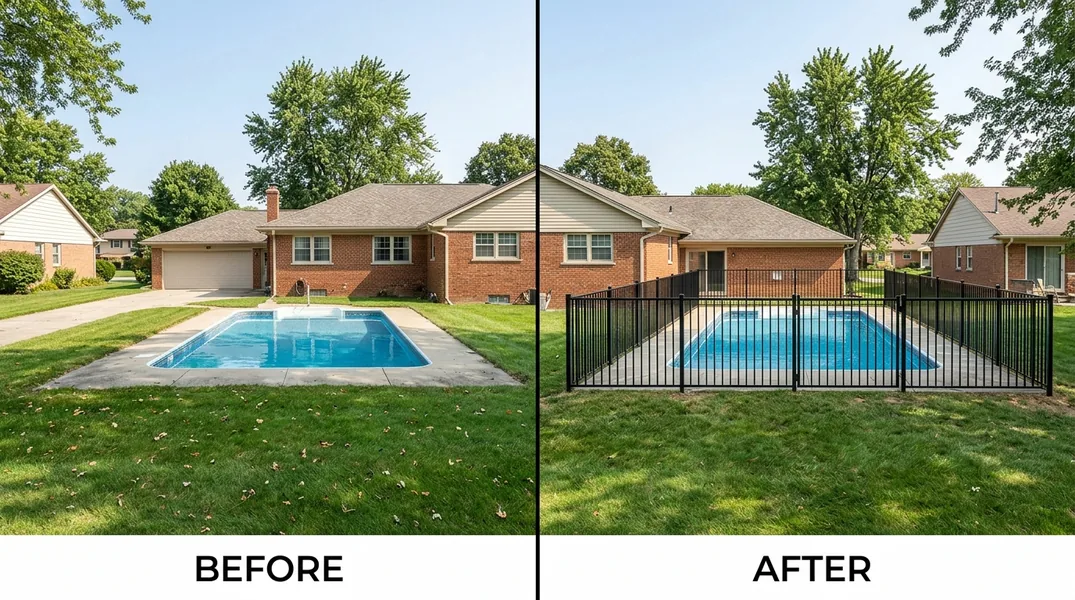
Understanding Alley-Served Lots in Detroit's Historic Neighborhoods
If you own a home on one of Detroit's classic bungalow blocks, you likely know the distinctive layout: a narrow lot with street frontage and an alley running behind the property line. This configuration, common throughout the city's residential neighborhoods built in the early 1900s, presents unique fencing challenges that differ from standard suburban properties. The alley itself is typically public or semi-public right-of-way, which means your fence line doesn't extend all the way to the back of your lot in the traditional sense.
Understanding your property's relationship to the alley is the first step toward planning an effective fence installation. Many homeowners in Detroit are surprised to learn that they cannot simply fence off the alley side of their property without checking local ordinances and easement rights. The alley may be maintained by the city, utilities may run through it, and neighbors may have legal access. Before you invest in any fencing project, it's worth reviewing your property deed and speaking with the city's Planning Department to understand exactly where your property line ends and public right-of-way begins.
The House-to-Garage Fence Run: Creating Privacy on Narrow Lots
One of the most practical fencing solutions for alley-served lots is the house-to-garage fence run. This approach involves installing a fence that connects your home's side wall directly to your garage or a rear structure, effectively creating an enclosed side yard and limiting access to the alley-facing portion of your property. This design is especially popular on Detroit's bungalow blocks, where many homes sit close to the street and rely on side yards for functional outdoor space. The fence run doesn't extend all the way to the alley, respecting public access while still giving you privacy and security where it matters most.
Wood & Privacy Fence Installation is the most common choice for house-to-garage runs because wood offers flexibility in height, style, and finish. A typical installation might run 30 to 50 feet, depending on your lot depth and garage location. The fence can be installed as a solid privacy fence (6 to 8 feet tall) to block views from the street and neighboring properties, or as a semi-privacy design if you prefer some visual lightness. Wood fencing also weathers beautifully over time and can be stained or painted to match your home's aesthetic, making it a popular choice for homeowners who care about curb appeal.
Material Options for Narrow Lot Fencing: Wood, Vinyl, and Beyond
When planning a fence for an alley-served lot, material selection depends on your budget, maintenance tolerance, and design preferences. Wood & Privacy Fence Installation remains the most affordable and versatile option for Detroit homeowners. Cedar, pine, and pressure-treated lumber are all viable, with cedar offering superior rot resistance and a more attractive natural finish. Pressure-treated wood is the most economical choice and will last 15 to 20 years with basic maintenance. The downside is that wood requires periodic staining or painting to maintain its appearance and protect against Michigan's freeze-thaw cycles.
Vinyl & PVC Fence Installation is gaining popularity for narrow lots because it requires virtually no maintenance and resists rot, insects, and weather damage indefinitely. Vinyl fencing costs more upfront but pays dividends over time since you'll never need to paint, stain, or repair rot damage. For homeowners who want a clean, modern look without the upkeep, vinyl is an excellent choice, especially on properties where the fence is highly visible from the street.
Chain Link Fence Installation can work for alley-side portions of your property if you're primarily concerned with security and defining the property line rather than privacy. Chain link is the most affordable material and requires minimal maintenance, making it practical for areas where privacy is less critical. Some homeowners use chain link for the alley-facing section and wood or vinyl for the more visible house-to-garage run, creating a cost-effective hybrid approach.
Navigating Detroit's Zoning and Fence Height Regulations
Before you call a contractor, you need to understand local fence height restrictions and setback requirements. Detroit's zoning code limits residential fence height to 4 feet in front yards and 6 feet in side and rear yards, though some residential districts have stricter rules. For alley-served lots, the distinction between front and rear yards can be confusing because your lot may be oriented differently than a standard suburban property. The city generally considers the street-facing side of your home the front, even if your lot is narrow. This means your house-to-garage fence run, if it's visible from the street, may be subject to the 4-foot height limit in some cases.
Setback requirements are equally important. Fences must typically be set back a certain distance from the property line, and on alley-served lots, you may be required to maintain clear sight lines at corners or intersections. If your fence is being installed near a corner lot or close to an alley intersection, the city may require a reduced height or transparent material in certain zones. It's not uncommon for homeowners to invest in a fence only to receive a violation notice, so taking time to verify regulations before installation is essential. Detroit Fence Pros recommends obtaining a free estimate that includes a review of local requirements, ensuring your project complies from day one.
Wood & Privacy Fence Installation Cost in Detroit: What to Budget
The pricing for a house-to-garage fence run on a Detroit alley-served lot typically ranges from $2,000 to $5,000, depending on material choice, fence length, and site conditions. A 40-foot run of 6-foot pressure-treated wood privacy fencing generally costs between $2,500 and $3,500, while cedar or composite materials run $3,500 to $5,000. Vinyl fencing for the same run costs $4,000 to $6,000 upfront but eliminates future maintenance expenses. These figures assume straightforward installation on relatively level ground; if your lot has significant grade changes, poor soil conditions, or existing structures that complicate installation, costs may be higher.
Labor makes up roughly 50 percent of the total cost for most residential fence projects. Proper installation requires setting posts at the correct depth (typically 3 feet for 6-foot fencing), ensuring level rails, and securely fastening all components. Cheap installation work often results in sagging fences and premature failure, so investing in experienced professionals is worthwhile. Detroit Fence Pros provides transparent pricing and detailed estimates so you know exactly what you're paying for. If you'd like a personalized quote for your alley-served lot, contact the team at (313) 513-0521 to schedule a site visit.
Working with a Local Contractor: Why Professional Installation Matters
Installing a fence on an alley-served lot requires knowledge of local conditions, regulations, and best practices specific to Detroit's neighborhoods. A professional contractor will assess your property's grade, soil type, and utilities before recommending a layout and material. They'll also handle all necessary permits and inspections, protecting you from code violations and ensuring your investment is legally sound. DIY fence installation might seem like a money saver, but mistakes in post depth, alignment, or material selection often lead to costly repairs within a few years.
Detroit Fence Pros has installed hundreds of fences throughout the city, including many on challenging alley-served lots where creativity and local expertise make the difference. The team understands how Detroit's unique lot configurations, weather patterns, and soil conditions affect fence longevity and performance. Whether you're looking for Wood & Privacy Fence Installation, a hybrid approach combining materials, or advice on the best solution for your property, a local professional can guide you through the entire process. Ready to move forward? Call (313) 513-0521 or visit Detroit Fence Pros online to request a free estimate today.
Looking for a professional tree service in Detroit? Detroit Fence Pros responds fast for all your fence needs.
Get a Free Quote