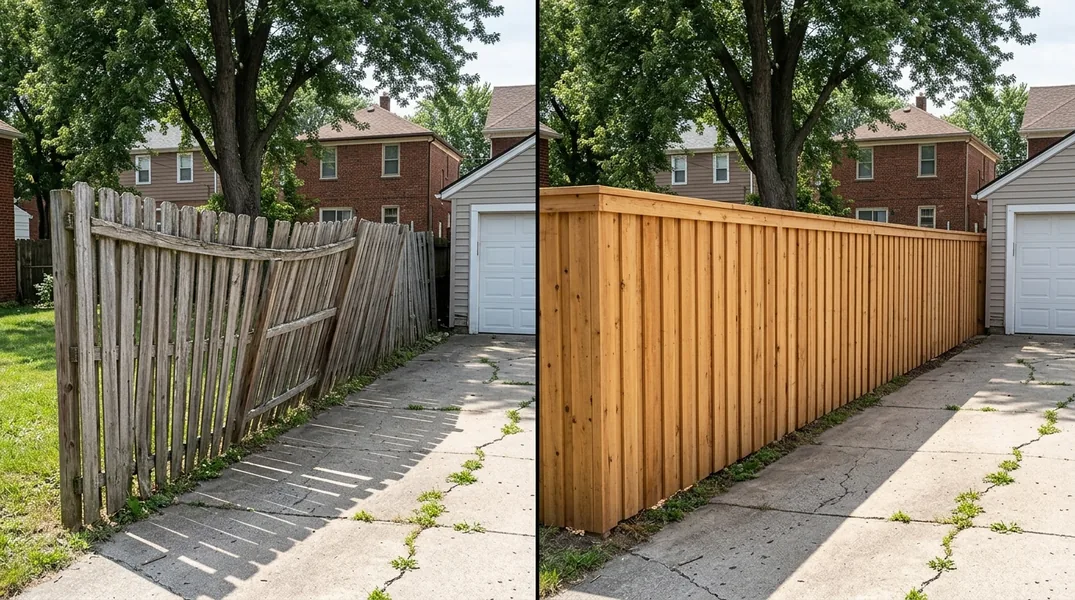
Chain Link vs Wood Fence: Understanding the Basics
When you're planning a fence project on a Detroit city lot, the choice between chain link and wood privacy fencing often comes down to your priorities. Chain link fences are constructed from galvanized or vinyl-coated steel wire woven into a diamond pattern, creating an open, see-through barrier. Wood privacy fences, by contrast, use solid wooden boards (typically cedar, pine, or pressure-treated lumber) installed vertically to create a complete visual barrier. Both serve functional purposes, but they deliver vastly different aesthetic and practical outcomes.
The fundamental difference lies in what each fence accomplishes. Chain Link Fence Installation prioritizes visibility and airflow, making it ideal for commercial properties, tennis courts, and utility areas. Wood & Privacy Fence Installation, on the other hand, creates seclusion, noise reduction, and a finished, residential appearance. For homeowners in Detroit deciding between these two options, understanding what each brings to your property is the first step toward making an informed decision.
Cheapest Fence Option: The Chain Link Advantage
If your primary concern is finding the cheapest fence option, chain link typically wins on initial installation cost. The materials are less expensive to manufacture and transport, and installation generally requires less labor than wood privacy fencing. A basic galvanized chain link fence can cost significantly less per linear foot than quality wood construction. For homeowners operating on a tight budget or managing large properties, this cost difference can be substantial, potentially saving thousands of dollars on a full perimeter installation.
However, the cheapest fence option upfront doesn't always mean the best value over time. Chain link requires minimal maintenance in the short term, but galvanized steel can rust in harsh Michigan winters, and vinyl-coated versions may crack or fade after years of exposure to Detroit's freeze-thaw cycles. Wood fencing demands regular staining, sealing, and board replacement, adding to lifetime costs. When calculating true value, consider how long you plan to keep the fence and whether you're willing to invest in ongoing maintenance. For a budget-conscious homeowner seeking a durable, low-maintenance solution, the cheapest fence option might actually require a slightly higher initial investment.
Aesthetics and Property Value: Why Wood Privacy Wins for Residential Lots
A wood privacy fence transforms the appearance of a residential property in ways that chain link simply cannot match. The warm, natural tones of cedar or pressure-treated wood complement most architectural styles, from classic Detroit bungalows to modern homes. Privacy fencing creates defined outdoor living spaces, enhancing curb appeal and often increasing property value. Real estate professionals consistently note that finished, attractive fencing is a selling point for homebuyers, whereas chain link is viewed as utilitarian and temporary by comparison.
On a typical Detroit city lot, where neighbors are close and properties are visible from the street, a wood privacy fence provides psychological and practical benefits. It establishes clear property boundaries, screens unsightly views, and creates a sense of ownership and pride in your outdoor space. Chain link, while functional, offers none of these aesthetic advantages. If you're planning to stay in your home long-term or considering future resale value, Wood & Privacy Fence Installation represents a more attractive investment than chain link, even if the upfront pricing is higher.
Dog Run Fence Considerations: Which Works Best for Your Pet
For homeowners with dogs, the choice between chain link and wood becomes more nuanced. A dog run fence must be secure, tall enough to prevent escape, and durable enough to withstand jumping, digging, and constant contact with your pet. Chain link excels in these practical areas. It's transparent, allowing your dog to see outside and reducing anxiety, and the open design lets air and light flow freely through the enclosure. Chain link is also extremely durable against dog damage; your pet cannot chew through or splinter the material like they might with wood.
However, a dog run fence made from wood privacy materials offers distinct advantages for your pet's comfort and your neighborhood relations. Dogs can become stressed by constant visual stimulation from passing pedestrians or cars, and a solid wood barrier reduces that overstimulation. Privacy fencing also muffles barking, which matters significantly in close-quarters Detroit neighborhoods. The trade-off is that wood requires protection against digging and chewing, and you'll need to inspect and repair boards periodically. For a dog run fence, many pet owners find that a hybrid approach works best: chain link for the primary barrier combined with wooden privacy slats inserted into the chain link for added security and noise reduction. Detroit Fence Pros can help you design a dog run fence that balances your pet's needs with durability and neighborhood compatibility.
Durability and Maintenance: Long-Term Performance in Michigan's Climate
Michigan's climate presents unique challenges for both fence types. Winter temperatures drop well below freezing, and the spring thaw creates significant freeze-thaw cycles that stress materials. Chain link fences handle temperature swings reasonably well, but galvanized steel can develop rust spots over time, particularly where salt spray from roads affects the fence. Vinyl-coated chain link performs better in harsh conditions, but the coating can crack and peel, exposing the steel underneath. Regular inspection and touch-up painting can extend chain link life, but these maintenance tasks add up over decades of ownership.
Wood privacy fencing faces more aggressive weathering in Michigan. Exposure to sun, rain, and snow causes wood to warp, crack, and splinter. Cedar naturally resists rot better than pine or spruce, but even premium cedar requires regular sealing and staining to maintain its appearance and integrity. Pressure-treated lumber is more affordable and rot-resistant but still demands maintenance every few years. The advantage of wood is that individual boards can be replaced without rebuilding the entire fence, whereas chain link damage often requires section replacement. For long-term durability in Detroit's climate, neither option is maintenance-free, but wood privacy fencing typically outlasts chain link when properly maintained, and the repairs feel more rewarding to many homeowners.
Making Your Decision: Chain Link vs Wood Privacy for Your Detroit Property
Choosing between chain link and wood privacy fencing ultimately depends on your specific needs, budget, and long-term vision for your property. If you need a temporary solution, have a large commercial area to enclose, or operate on a strict budget with minimal maintenance capacity, chain link is a practical choice. If you're a homeowner seeking privacy, aesthetic appeal, property value enhancement, and are willing to invest in periodic maintenance, wood privacy fencing delivers superior results on a residential Detroit lot.
The experts at Detroit Fence Pros have installed both fence types throughout the Detroit area and understand the unique demands of local properties. Whether you're considering chain link for a dog run fence, comparing the cheapest fence option, or evaluating wood privacy fencing for your home, our team can provide honest guidance tailored to your situation. We're ready to discuss your project, answer your questions, and provide a free estimate that fits your needs. Call Detroit Fence Pros today at (313) 513-0521 to schedule a consultation and take the first step toward the fence that's right for your property.
Looking for a professional tree service in Detroit? Detroit Fence Pros responds fast for all your fence needs.
Get a Free Quote